Navigating the world of early childhood education can feel like trying to solve a Rubik’s Cube while riding a unicycle. But fear not. The Florida Early Learning Standards serve as a trusty map, guiding educators, parents, and community members alike toward fostering vibrant learning experiences for little ones. In this text, we’ll break down these standards in a way that’s engaging and informative, so buckle up as we embark on this educational ride.
Overview of Florida Early Learning Standards
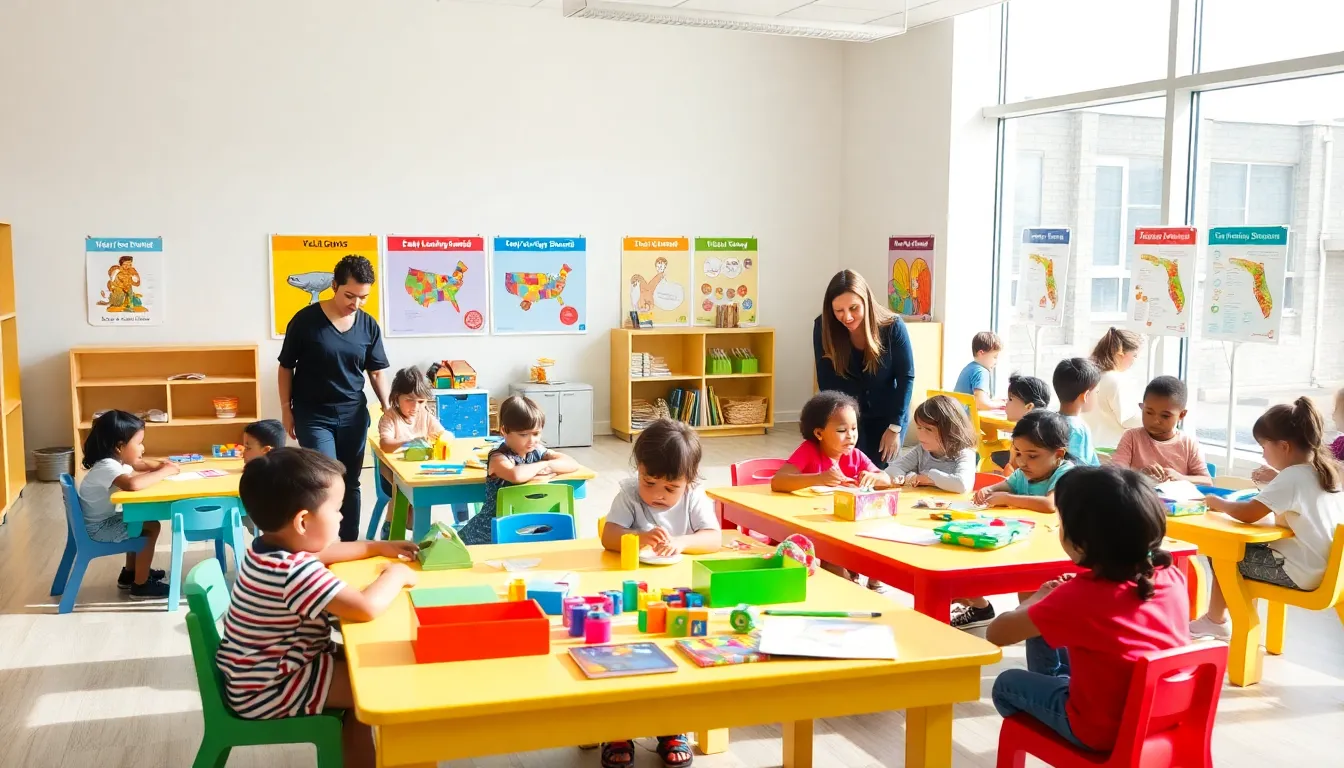
The Florida Early Learning Standards are foundational guidelines crafted to ensure that all children from birth to age five have access to quality educational experiences. Designed to promote holistic development across various domains, these standards encompass physical, cognitive, social-emotional, and language development. This framework not only focuses on preparing children for kindergarten but also sets the stage for lifelong learning, providing a comprehensive approach that addresses the first critical years of a child’s development.
By establishing clear expectations for what young learners should know and be able to do, these standards help educators create nurturing, effective learning environments. They also serve as a roadmap for assessing children’s progress and needs, ensuring that each child can thrive as they embark on their educational journey.
Importance of Early Learning Standards
Why exactly are these standards essential? The answer is simple: they provide a framework for high-quality education that can significantly influence a child’s growth trajectory. Research shows that a strong early education can lead to better academic performance later in life, increased graduation rates, and enhanced social skills.
Besides, early learning standards help bridge the gap between home and school environments. They empower parents by giving them the tools to understand what their children should be learning and how to support that process at home. Educators gain valuable insights into best practices and effective teaching strategies that cater to young learners’ needs. In essence, these standards create a cohesive support system around a child’s educational experience.
Key Components of Florida Early Learning Standards
The Florida Early Learning Standards encompass several key components vital for a child’s development. These components include:
- Physical Development: Encouraging children to develop fine and gross motor skills through activities like running, jumping, and manipulating small objects.
- Cognitive Development: Fostering critical thinking and problem-solving abilities through exploration, play, and structured learning activities.
- Language and Communication: Promoting vocabulary growth, comprehension, and expressive language skills through conversations, storytelling, and reading.
- Social-Emotional Development: Supporting children in developing self-regulation, empathy, and interpersonal skills to navigate relationships with peers and adults.
- Creative Expression: Allowing children to explore and express themselves through art, music, and imaginative play.
By integrating these components into daily learning experiences, educators can create a balanced, well-rounded approach that cultivates the whole child.
Implementation Strategies for Educators
Implementing the Florida Early Learning Standards requires thoughtful planning and purposeful strategies. Educators can begin by developing comprehensive lesson plans that align with the standards, ensuring activities are engaging and age-appropriate. Here are a few effective strategies:
- Differentiated Instruction: Tailoring lessons to meet the diverse learning needs of children. This could mean modifying activities based on individual abilities or interests.
- Play-Based Learning: Incorporating play into the curriculum, as it promotes active engagement and reinforces developmental skills in a fun manner.
- Family Engagement: Actively involving families in the learning process can enhance children’s educational experiences. Educators should share resources and suggestions for learning at home, creating a community of support.
Assessment and Evaluation of Learning Outcomes
Assessment in early childhood education is not merely about tests and grades: it’s about understanding how children develop over time. The Florida Early Learning Standards emphasize ongoing assessment to monitor learning outcomes effectively. Educators can use various assessment tools, such as observational checklists and portfolio assessments, to track progress.
These assessments are crucial as they help identify strengths and areas for improvement. Besides, they guide instructional decisions, allowing educators to refine their teaching based on children’s needs. This continuous feedback loop ensures that children receive the support they need to achieve developmental milestones, fostering their growth and readiness for future educational endeavors.
Supporting Families and Communities
The role of families and communities in early childhood education cannot be overstated. Engaging families in the learning process is not just beneficial: it’s essential. The Florida Early Learning Standards encourage resources and programs that involve families, ensuring they feel competent and confident as partners in their child’s education.
Communities can also support early learning by providing access to educational resources, enrichment programs, and support networks. Collaborating with local organizations can enhance learning opportunities and contribute to a richer educational landscape. When families and communities work together, they create a robust support system that nurtures children’s development and well-being.